

A word notebook is useful when it helps you return to a word and use it in context. It is less useful when it becomes a long list of definitions copied without explanation. The goal is not to collect the most entries. It is to keep a small set of words connected to the reading and situations that matter to you.
Start with a notebook or cards you already have. Leave enough space to add an example later. A page that looks unfinished can be more useful than a tightly filled page because your understanding of a word may change as you meet it again.
Choose words for a reason
Select a word that blocks the meaning of a passage, appears repeatedly in a topic you care about, or would help you explain something. Not every unfamiliar word deserves equal attention. A rare name in a story may need recognition without becoming a vocabulary project.
Write where you met the word. A book title and page number, a public article heading or a general description of a conversation can be enough. Avoid copying private details from a letter, form or workplace document into a notebook that others may see.
Keep the list small enough to revisit. Three useful entries that you return to can serve you better than thirty entries that disappear into a folder. There is no required number per week; the right amount depends on the task and the support available.
Save the sentence around the word
A word can have several meanings. “Charge” might refer to a cost, an accusation, electrical energy or a responsibility. A definition without context may be correct in general and wrong for the sentence you were reading.
Record a short phrase or sentence where copyright and privacy allow it, or write your own summary of the context. Then note which meaning fits. If you quote from a copyrighted source, keep the excerpt brief and retain the source reference. You do not need to copy a whole paragraph to preserve the question.
For an invented example, write: “The library will renew the loan.” The useful explanation of “renew” here concerns extending the borrowing period. A different sentence about renewing a roof would need another explanation. The surrounding words help you choose.
Learning supply note
As an Amazon Associate I earn from qualifying purchases. A purchase through these links can support Read Iowa.
Five Star blue college-ruled notebook
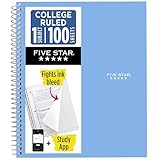
Keep words and worked examples together in this single-subject spiral notebook. Its college-ruled lines suit compact handwriting; choose wider spacing if you need more room.
View this choice on Amazon USThe House on Mango Street, paperback

Sandra Cisneros tells this story through short, linked pieces. Try a library copy or sample first to judge the language and print size. The book includes mature themes; it is a literary choice, not a graded reading course.
View this choice on Amazon USExplain it in words you understand
After checking a reliable dictionary or asking a tutor, write a short explanation in your own language. If the definition contains another word you do not understand, resolve that before copying it. A notebook full of harder definitions can obscure rather than clarify the original problem.
You can use a sketch, a familiar example or a translation if it helps. Make clear which is the definition and which is an example. An example of one use does not necessarily cover every meaning of the word.
Read the original sentence again with the explanation in mind. Ask whether the sentence now makes sense. If not, the problem may involve another word, a reference such as “it,” or an idea the passage assumes you already know.
Write your own sentence carefully
An original sentence gives you a chance to use the word rather than recognize it. Keep the sentence simple enough that the meaning is clear. For “confirm,” you might write, “I will call to confirm the meeting time.” The action shows what the word contributes.
Do not force a sentence merely to fill a blank. If you are uncertain whether the use is natural, mark it with a question and ask a tutor or consult examples in a suitable dictionary. A confidently written error can become harder to notice after repeated review.
Try contrasting two uses when the word has more than one relevant meaning. “The shop charges a delivery fee” and “The phone needs to charge” share a spelling but describe different actions. The comparison can make the distinction easier to recall.
Notice useful word parts
Some words contain parts that help connect them to other words. You might notice “re-” in reread or “un-” in unclear. Record a connection when it helps with the word you are studying, but avoid assuming every similar-looking sequence has the same function.
A tutor can help decide which patterns to study systematically. A personal notebook should support that instruction rather than replace it with guesses about word origins. English has borrowed words from many sources, and spelling similarities do not always establish a useful meaning relationship.
Keep the observation modest: “I notice this word begins like…” is different from declaring a rule that always works. When a pattern fails, record the exception or ask why. The question can be useful without requiring you to solve it immediately.
Return to the entry in a different way
On the first return visit, cover the explanation and try to say the meaning in the original sentence. On another visit, write a new sentence or identify which of two examples fits. Varying the task helps you see whether you understand the use rather than merely recognize the notebook page.
If you cannot recall the meaning, look and try again without treating the lapse as a verdict. Ask whether the explanation was clear enough and whether the word is still useful to your goal. Some entries deserve more work; others can wait.
An entry can be moved to a “comfortable for now” section when you no longer need frequent reminders. Keep permission to return it to the active section when a new meaning appears. Vocabulary knowledge is not always an all-or-nothing state.
Use the notebook during real reading
Keep the notebook nearby, but do not interrupt every sentence to make an entry. A small mark or temporary note can preserve the question until the end of a section. Then choose the words that matter most to understanding it.
Return to the passage after making the entry. Explain its main point with the new word understood. This connects the vocabulary work to the reason you were reading. Without that return, the notebook can become a separate activity that consumes the whole session.
If you use audio, note the chapter or timestamp where practical. Listening to the sentence again can help connect pronunciation and meaning. The audio-and-print guide suggests a few ways to try that without needing to follow both formats at the same time.
A sample page layout
Divide a page into five spaces: word, where I met it, meaning here, my example, and next question. For a sample entry using “deadline,” the context might be an event registration notice. The meaning could be “the last time the organizer accepts registration.” An example could be “The registration deadline is Friday at noon.”
The next question might be whether the form must arrive by noon or merely be sent by then. That question belongs to the actual organizer when a real deadline matters. Understanding the word does not resolve every procedural detail in a notice.
This example shows why context and action belong together. A person can define “deadline” and still need to clarify the time zone, delivery method or exception policy. Use the notebook to preserve the question, not to invent the answer.
Keep digital notes simple and private
A notes app can work if you already use it comfortably. Check how to search entries, make a backup and access them when offline if that matters. A complex flashcard system is optional, not a condition of learning vocabulary.
If the device is shared, avoid storing private documents or identifying information in examples. Use invented names and neutral situations. Do not upload a learner's personal work to an external service without the permission and procedures required by the program.
Paper also needs care. A notebook left on a shared table can reveal details just as a shared screen can. Keep the examples useful while removing information that is not needed for the learning task.
Review what the notebook is doing for you
After a few sessions, ask which entries you actually returned to and which explanations still make sense. If the pages are too crowded, use fewer words per page. If you never reopen it, connect review to an existing reading session rather than inventing another separate habit.
Bring a few uncertain entries to a tutor. A small selection with clear questions is easier to discuss than a large undifferentiated list. The tutor table guide explains how to keep a session centered on the learner's purpose.
Use the reading routine to make room for a brief review and the book basket for notebook selection questions. The notebook should remain a working tool: a place to keep meaning, examples and questions close enough to use again.
Before you choose
As an Amazon Associate I earn from qualifying purchases. A purchase through these links can support Read Iowa.
Five Star blue college-ruled notebook
Keep words and worked examples together in this single-subject spiral notebook. Its college-ruled lines suit compact handwriting; choose wider spacing if you need more room.
View this choice on Amazon USPut the idea to work in the practice tools, or browse the book basket checklist.