

A reading routine works best when it has a job to do. Perhaps you want to follow a chapter without losing the thread, understand a notice from a service provider, or read a short article and tell someone what it says. Choose one of those purposes before deciding how many pages to finish. A page count can record activity, but it cannot tell you whether the activity helped.
A short routine is easier to adjust than a large promise. Fifteen minutes is a useful example, not a prescribed dose. You may prefer five minutes at a quiet table or a longer session with a tutor. The aim is to make a repeatable arrangement that fits your life and gives you a clear next step.
Pick one text you can return to
Start with a text you want to understand and can legally keep or borrow for a little while. A short library book, a public information leaflet or a newspaper feature can work. A real document with an urgent consequence may need help from its sender; do not turn a confusing deadline into a solo reading experiment.
Look at a sample before committing. Check the size of the print, length of the paragraphs and familiarity of the subject. A text can be challenging because its words are unfamiliar, because the ideas are new, or because its layout makes it difficult to follow. Those are different problems. Changing the text may solve one without solving the others.
Choose a stopping point before starting. “The next two paragraphs” is clear. “Until I get better at reading” is not. Put a removable bookmark at the end of the section if that helps you see the size of the task. You can always continue after reaching it.
Give the minutes different jobs
Here is one possible fifteen-minute session. Spend the first two minutes looking back at the previous passage. Use roughly seven minutes for a new section, pausing when a word or sentence needs attention. Spend three minutes explaining the main point aloud or in a note. Use the remaining time to mark your place and choose what to do next.
The divisions are a planning example, not a race. If a useful discussion takes the whole session, the time was not necessarily wasted. If a passage is far too difficult, choosing a different one is a reasonable outcome. A routine should support attention rather than punish a change of plan.
Keep the task visible on a small card: “Read, pause, explain, choose.” That is enough structure to return to after an interruption. You do not need a complicated app, a new subscription or a record of every second to begin.
Learning supply note
As an Amazon Associate I earn from qualifying purchases. A purchase through these links can support Read Iowa.
The House on Mango Street, paperback

Sandra Cisneros tells this story through short, linked pieces. Try a library copy or sample first to judge the language and print size. The book includes mature themes; it is a literary choice, not a graded reading course.
View this choice on Amazon USFive Star blue college-ruled notebook
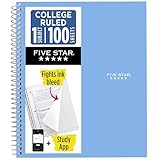
Keep words and worked examples together in this single-subject spiral notebook. Its college-ruled lines suit compact handwriting; choose wider spacing if you need more room.
View this choice on Amazon USPause where meaning gets uncertain
After a short section, ask what it was mainly about. Then ask what detail supports that explanation. If you can repeat a sentence but cannot say what it means, look at the words around it and the purpose of the passage. You may need to reread, ask for an explanation, or look up one important word.
Try not to collect every unfamiliar word at once. Select the word that prevents you from understanding the point. Write a short explanation in language you understand and return to the sentence. A dictionary entry copied without understanding can make the notebook longer without making the passage clearer.
For example, an invented notice says, “Please confirm attendance by Friday.” If “confirm” is the difficulty, the practical question is what the reader must do. The explanation might be “tell them whether I will come.” The next question is where and how to send that response. Reading the word and understanding the required action belong together.
Keep a record that answers a question
A useful record might have four lines: date, text, something understood, and a question for next time. It does not need a score. “I understood the first reason but lost track of who ‘they’ referred to” is more useful for the next session than “bad reading day.”
If you work with a tutor, show the record and ask which pattern deserves attention. The LINCS adult-reading resources describe several connected components of reading. A learner may need different kinds of instruction, and a notebook cannot diagnose the reason for a difficulty. It can preserve an example worth discussing.
Keep private documents private. Use a general title rather than copying an account number, medical detail or another person's name. The practice planner on this site does not save your entries, but paper and personal notes still deserve care when they contain identifying information.
Build a routine around an existing cue
Choose a moment that already happens: after clearing breakfast, before a television program, or while waiting for a regular pickup. The cue should be practical rather than ideal. A quiet morning routine is no use if your mornings are consistently crowded.
Put the text and pencil where you will use them. Remove a small obstacle such as a missing bookmark or a lamp that needs moving. If the place is shared, a folder can keep the materials together without claiming a permanent desk. The goal is to make starting easier, not to build a perfect study room.
Plan an alternative for a busy day. You might read one paragraph, listen to a short section, or write down the question you want to bring to a tutor. An alternative keeps the task connected to the week without pretending that every day has equal time and energy.
What to do after a missed session
Resume with the last clear stopping point. You do not need to repay missed minutes before continuing. Look at why the session was missed: the time was unrealistic, the material was inaccessible, another commitment took priority, or you simply forgot. Each explanation suggests a different adjustment.
If the task was too large, shorten it. If the text was discouraging, try another sample. If the schedule changed, move the cue. If you need instruction rather than more independent practice, ask a program or tutor about that. Repeating an arrangement that does not work is not the same as being persistent.
Avoid comparing your routine with another person's page count. Print size, subject knowledge, reading purpose and support all affect what happens during a session. The useful comparison is between what you intended to do and what you actually learned about the task.
Try a three-session experiment
For the first session, choose a short text and identify its main point. In the second, reread the same section and note one detail you missed before. In the third, read a new section and explain how it connects to the first. These are original practice suggestions; they are not a standardized reading assessment.
Afterward, answer three questions. Was the time convenient? Was the material worth reading? Could you explain more after working with it? If the answer to one is no, change that part before adding more time. A small experiment can tell you more about the arrangement than an ambitious month-long promise.
If you prefer a partner, take turns explaining the passage. Ask the listener to say which part was clear and which part needs an example. The listener does not need to quiz every sentence. A conversation about meaning is often a more useful finish than a count of pages completed.
A worked planning example
Suppose you choose fifteen minutes on four days each week. That is sixty minutes weekly. Across four weeks it is sixteen sessions and 240 minutes. Those numbers describe planned time only. They do not predict a reading level or guarantee a particular outcome.
Now suppose one of the four days regularly disappears because of a changing work schedule. A plan for three reliable days gives 45 minutes weekly. You could keep the fourth as an optional session. The smaller plan may be more usable because it accurately describes the available time.
Write down the session task beside each day. On Monday, preview and read a short section. On Wednesday, review difficult words in their sentences. On Friday, explain the passage and choose the next text. This is one possible distribution, not a rule that each reading component must be studied on a separate day.
Leave yourself a good next page
Stop by marking both the place and the task. “Page 18, start at the second paragraph, check who the letter is addressed to” is a more useful instruction than a bookmark alone. When you return tired or distracted, the note saves you from deciding everything again.
Use the reading planner to check your time arithmetic. For help choosing material, see adult-interest books. A learning partner can use the tutor table guide to prepare a session around your goal.
Background reading
LINCS: Understanding reading instruction for adult learners, a chapter in a 2005 teacher resource, provides background on connected reading skills. The timetable and exercises in this article are Read Iowa's own planning examples, not a prescribed program from that source.
Before you choose
As an Amazon Associate I earn from qualifying purchases. A purchase through these links can support Read Iowa.
The House on Mango Street, paperback
Sandra Cisneros tells this story through short, linked pieces. Try a library copy or sample first to judge the language and print size. The book includes mature themes; it is a literary choice, not a graded reading course.
View this choice on Amazon USPut the idea to work in the practice tools, or browse the book basket checklist.