
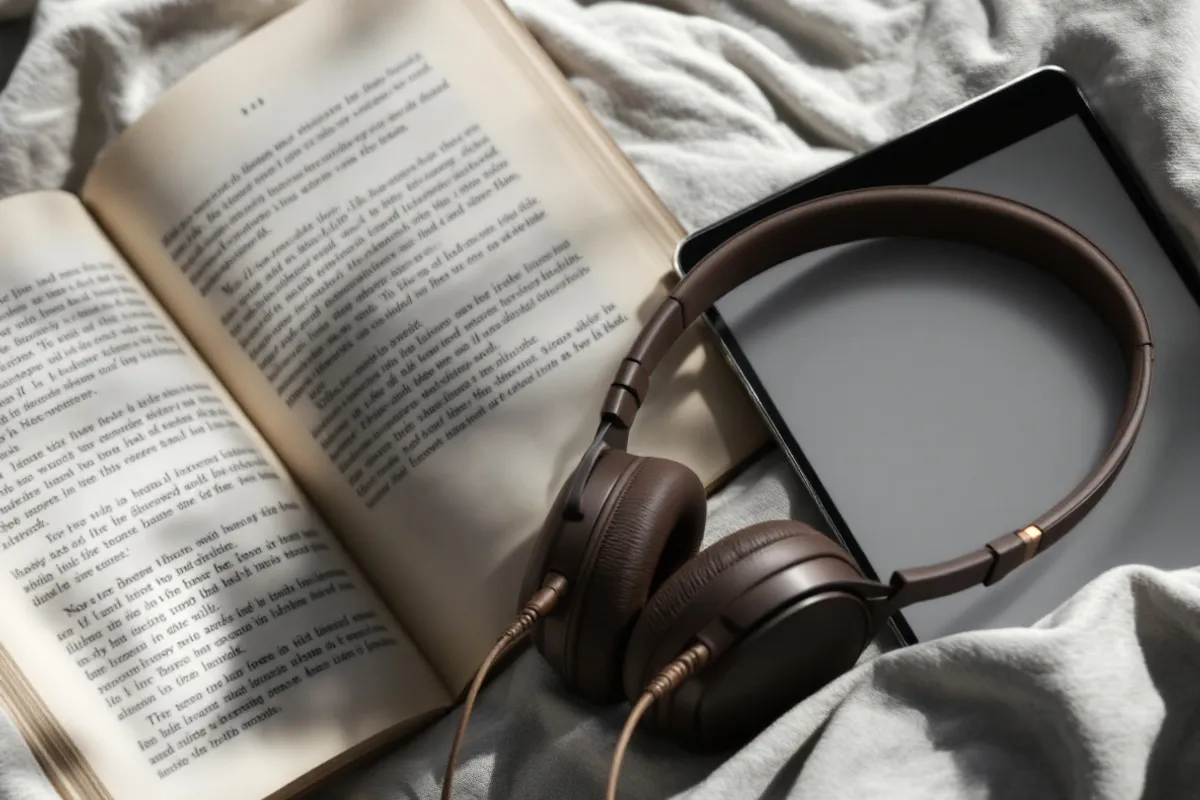
Listening and reading can serve different purposes in the same week. You might listen to a story for enjoyment, read a short passage closely with a tutor, and use a printed reference page to find an instruction. There is no need to make one format prove that another is legitimate.
If you want to follow print while listening, start with a short sample. The practical question is whether the combination helps you stay with the passage and understand it. A particular audiobook, narrator, device or text setting may work well for one task and poorly for another.
Decide what the session is for
Choose a purpose before changing settings. Are you listening to enjoy the story, checking the meaning of a paragraph, or following how a sentence sounds? Those purposes can lead to different choices. Enjoyment may call for a comfortable listening pace. Close work may involve frequent pauses and returning to a few lines.
Do not assume listening alone provides all the instruction a learner needs. Word identification, vocabulary and comprehension can require different kinds of support. A tutor or adult educator can help plan that work. An audio format is an access choice, not a diagnosis or a promise that a reading difficulty will disappear.
Write a small goal, such as “follow one scene and explain what changed.” It gives you a way to judge the session without turning it into a speed contest or a test of how many minutes you can tolerate.
Match the editions before you begin
Check that the recording is unabridged if you want it to follow a complete printed text. Even then, editions can differ. Introductions, chapter names, notes and revisions may not appear in the same place. A sample can reveal the mismatch before you buy both formats.
Find a short passage near a clear chapter heading. Play the recording and locate the corresponding printed sentence. If the words differ repeatedly, check the edition details rather than assuming you are losing your place. The problem may belong to the materials.
If matching is inconvenient, use the formats separately. Listen to a chapter, then read a related short passage. Or read a summary you have written yourself and use the audio to revisit the scene. Exact simultaneous tracking is one option, not a requirement for a useful session.
Learning supply note
As an Amazon Associate I earn from qualifying purchases. A purchase through these links can support Read Iowa.
The House on Mango Street, paperback

Sandra Cisneros tells this story through short, linked pieces. Try a library copy or sample first to judge the language and print size. The book includes mature themes; it is a literary choice, not a graded reading course.
View this choice on Amazon USFive Star blue college-ruled notebook
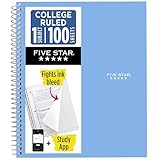
Keep words and worked examples together in this single-subject spiral notebook. Its college-ruled lines suit compact handwriting; choose wider spacing if you need more room.
View this choice on Amazon USLearn a few controls well
Locate pause, play, skip back and bookmarks. Try them before beginning a longer passage. An interface that looks simple can behave differently when the screen locks or when headphones are connected. Practice with a harmless sample so that a control surprise does not interrupt the part you care about.
Check whether speed adjustment changes the sound in a way you find comfortable. Slower is not automatically easier, and faster is not automatically better. Choose a pace that lets you follow the purpose of the session. If you are constantly struggling to catch up, pause and reduce the task.
A bookmark should have a useful label when the service allows one. “Question about the notice in chapter two” is easier to find later than a long list of unnamed timestamps. Avoid storing personal details in a shared device's notes.
Try a short paired passage
Choose two or three paragraphs. Preview the heading and any names you need to recognize. Listen while following the print if that is comfortable. Pause at the end and say what the passage was mainly about. Then return to a sentence that needs attention.
On a second pass, choose one feature to notice. It might be where the narrator pauses, which word carries emphasis, or how the pronoun refers back to a person named earlier. Keep the observation connected to meaning rather than trying to imitate every detail of a performance.
You can stop following the print if doing both at once becomes distracting. Listen first and read afterward, or ask a learning partner to read a short section aloud. The useful arrangement is the one that supports the task, not the one that looks most like a study technique.
Separate a hard word from a hard idea
If you can understand a sentence when hearing it but struggle with its printed words, preserve the example for a tutor. If the sentence remains unclear in either format, the vocabulary, context or idea may need explanation. These observations help describe the task; they do not establish a diagnosis.
Ask what information is missing. A historical account may assume knowledge of an event. A technical guide may use a term it has not explained. An audiobook does not automatically supply that background. A short, reliable reference or a discussion may be more useful than replaying the same sentence many times.
For an unfamiliar word, listen to the sentence again after checking a plain-language definition. Then explain how the word is being used there. Many words have more than one meaning, so the first dictionary entry is not always the relevant one.
Compare borrowing before subscriptions
Ask your library what audio and digital borrowing options it offers. Confirm whether access requires a particular card, app or device and whether a title has a waiting list. The available catalogue and lending rules can differ between libraries and services.
Before paying for a subscription, read the current terms. Check what happens to an unused credit, whether a title is borrowed or purchased, how cancellation works and whether access continues afterward. Do not infer these details from an advertisement saying a service has thousands of books.
A single purchased audiobook, a library loan and a subscription solve different problems. Estimate how often you actually listen before committing to a recurring charge. Keep the decision about access separate from the enthusiasm you feel after hearing one appealing sample.
Accessible library services have their own rules
The National Library Service at the Library of Congress describes service for eligible people who cannot read or use regular print because of specified visual, physical, perceptual or reading disabilities. Its application guidance explains certification and working through a network library.
Read the current eligibility page and contact the relevant service with questions. This article cannot decide whether a person qualifies. Do not send private medical or identity records to the Read Iowa contact desk in an attempt to obtain access.
Accessible formats can also be available through other programs or a local library. Ask what is offered rather than assuming one national service is the only possible source. The right question is which format and access route fits the person's circumstances under the provider's current rules.
Choose equipment for the setting
If you already have a usable phone, tablet or player, begin there. Learn its controls and test a sample before buying dedicated equipment. A new device can introduce another interface to learn without solving the difficulty that prompted the purchase.
For headphones, think about comfort, controls, connection and the setting where they will be used. A shared room may call for different choices than listening alone at home. Check return terms and compatibility rather than relying on a product photograph to establish fit.
No equipment described here has been hands-on tested by the reading desk. The book basket gives selection questions. It does not claim that a particular brand will improve reading or that an expensive accessory is necessary for learning.
Keep an audio-and-print note
Use four headings: passage, format, what helped, and what to change. Under “what helped,” write something observable, such as “the chapter bookmark let me return to the conversation.” Under “what to change,” write “try reading after listening instead of at the same time.”
A note like this can make the next experiment smaller and clearer. Without it, it is easy to conclude that audio simply works or does not work based on one session with a poor edition match or an unfamiliar interface.
If you study with a partner, compare observations without assuming the same setup should suit both people. One may prefer listening first; another may prefer reading a passage aloud together. Keep the learner's goal at the center of the decision.
Finish with meaning, not minutes
At the end, explain one idea, describe one event or identify one question. A completed listening timer does not tell you whether the session served its purpose. You can enjoy a story without writing a report, but when the goal is study, a brief explanation gives you something useful to revisit.
For choosing the next text, see adult-interest books. For a manageable routine, use the reading plan guide. The adult-reading starting page suggests ways to discuss support with a program or tutor.
Source and access information
Library of Congress: Apply for NLS services is the primary source for the eligibility summary above. The paired-reading exercises and equipment checklists are original suggestions, not claims that the service endorses this site or a product.
Before you choose
As an Amazon Associate I earn from qualifying purchases. A purchase through these links can support Read Iowa.
The House on Mango Street, paperback
Sandra Cisneros tells this story through short, linked pieces. Try a library copy or sample first to judge the language and print size. The book includes mature themes; it is a literary choice, not a graded reading course.
View this choice on Amazon USPut the idea to work in the practice tools, or browse the book basket checklist.