A tile listing looks simple at first: a photo, a color name, a size, a few lines about how the tile was made. Read slowly, though, it holds the answers to three practical questions. What will this tile look like on my wall, how much do I need, and what will it ask of me after it goes up? Planning a Moroccan zellige tile project is easier when you read the seller's page in passes, the way you would read any document you plan to act on.
The examples in this note are invented practice tasks. They show a way of reading, not the terms of any real listing, and they are no substitute for the seller's own product details or for the advice of the person who will install the tile.
Name the one question you are bringing to the page
Before you scroll, write a single question at the top of a sheet of paper. One question keeps the reading focused. Good first questions are narrow: "Will this color work beside my cabinets?" or "How many boxes do I need for the wall behind the sink?" A question like "Is this the right tile?" is too wide to answer from one page.
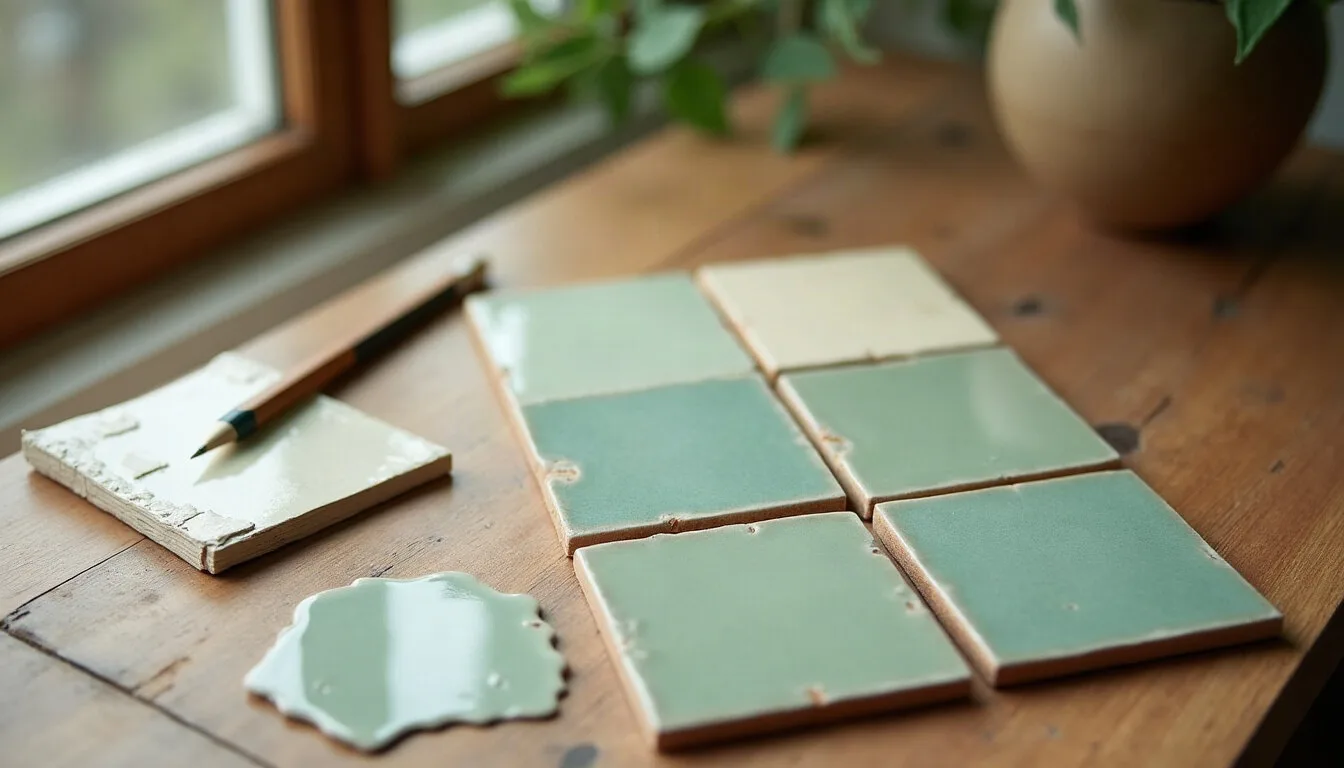
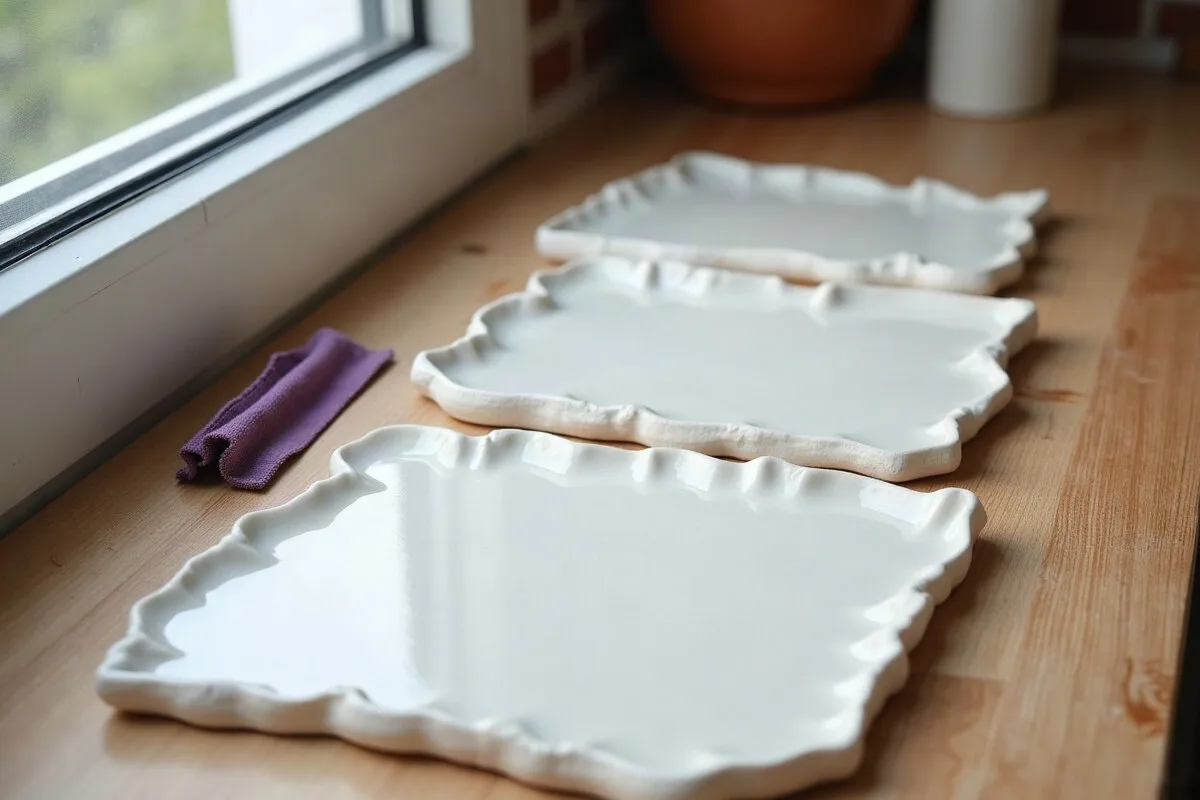
It also helps to know what kind of tile you are reading about. Zellige is a glazed clay tile made by hand in Morocco. Because each piece is shaped and glazed by hand, the surface is uneven, the edges can be slightly irregular, and the color shifts from one tile to the next. Those features are the reason many people choose it, and they also explain why the listing will use words that a factory tile page would not.
Read the page for its shape first
On the first pass, do not try to understand every sentence. Look only at how the page is built. Most tile listings have a few parts, even when the headings differ:
- The name and color: what the seller calls this tile.
- Size and shape: the dimensions of one piece, and the shape, such as square or rectangle.
- How it is sold: by the piece, by the box, or by area covered.
- A description: how the tile is made and what it looks like.
- Care or installation notes: what the tile needs once it is on the wall or floor.
Put a light pencil tick beside each part you find. If a part seems to be missing, write it on your sheet as a question. A missing detail only becomes a problem if you order without asking.
Learning supply note
Library first: try what you can borrow or already own before buying supplies.
The House on Mango Street, paperback
Sandra Cisneros tells this story through short, linked pieces. Try a library copy or sample first to judge the language and print size. The book includes mature themes; it is a literary choice, not a graded reading course.
Read the buying checklistFive Star blue college-ruled notebook
Keep words and worked examples together in this single-subject spiral notebook. Its college-ruled lines suit compact handwriting; choose wider spacing if you need more room.
Read the buying checklistMark the words that need a second look
On the second pass, read the description slowly and underline any word that could mean more than one thing. With handmade tile, these are often the words that describe variation. You might see phrases like “natural variation,” “irregular edges,” “chips are part of the character,” or “each batch is unique.”
None of these phrases is a warning. They describe what handmade tile is. The reading task is to turn each phrase into something you can picture. Ask yourself what the phrase would look like across a whole wall rather than in one close photo.
Suppose an invented listing says: “Color varies from tile to tile and from batch to batch.” That sentence makes two separate statements. Within one order, tiles will not match each other exactly. Between orders placed at different times, the overall shade may differ. The second statement matters for quantity, because it suggests you should order everything you need at once, with some extra, rather than coming back for a few more later.
Write each underlined phrase in a short table on your sheet, with what it seems to mean and what you still want to know.
| What the page says | What it seems to mean | What you still need to ask |
|---|---|---|
| “Natural variation” | No two tiles look identical | How wide is the range in this color? |
| “Each batch is unique” | Later orders may differ in shade | Should everything be ordered at once? |
| “Irregular edges” | Pieces are not perfectly straight | What grout joint does the installer suggest? |
Pencil ready
- Find one sentence on a tile listing that describes how the tiles differ from each other.
- Underline it and split it into separate statements, one per line.
- Beside each statement, write what it would look like on a whole wall.
- Check: you should end with one plain sentence for each statement, such as “Tiles in one order will not match exactly.”
Work the quantity in an invented example
Now turn to the numbers. Tile is usually sold by the box or by the area a box covers. Area means the flat space a surface takes up, found by multiplying its length by its width. Write the answer's unit first, square feet, so you do not lose track.
Suppose an invented backsplash measures 10 feet long and 2 feet high.
- Area: 10 feet times 2 feet equals 20 square feet.
- Allowance for cuts and breakage: suppose the installer tells you to add 10 percent. Ten percent of 20 is 2, so you plan for 22 square feet.
- Boxes: suppose an invented box covers 5 square feet. 22 divided by 5 is 4.4. You cannot buy part of a box, so you round up to 5 boxes.
- Coverage check: 5 boxes times 5 square feet is 25 square feet, which is more than the 22 you need.
The allowance in step 2 is the part you should never guess. The right amount depends on the tile, the layout and the room, and it is the installer's call. With handmade tile some people plan a larger allowance, because a few pieces may be set aside for color or shape, but the number should come from the person doing the work.
Pencil ready
- Measure an invented wall of 8 feet by 3 feet and write the area in square feet.
- Add an invented allowance of 10 percent.
- Divide by an invented box coverage of 6 square feet, then round up.
- Check: write “I need ___ boxes, covering ___ square feet,” and confirm the second number is larger than your total.
Check the result a second way
A second look catches small mistakes. Estimate before you trust the exact figure. In the first example, 20 square feet plus a little extra is a bit over 20, and boxes of 5 square feet would need four and a bit. Five boxes sits comfortably in that range, so the arithmetic is probably right.
Then remember what the arithmetic cannot tell you. It answers a narrow question: how much tile covers this area. It does not tell you whether the wall is ready for tile, which layout suits the space, how wide the joints should be, or whether this tile suits a floor, a shower or a backsplash. Those are separate decisions, and the page alone does not settle them.
Ask the right person
Two people can answer the questions left on your sheet. The seller knows the product. The installer knows your room and how the tile should be set. Write your questions in two short lists so each person gets the ones meant for them.
Questions for the seller might include:
- “How much does color vary within this one shade?”
- “Is the tile sold by the piece, by the box, or by area?”
- “Can I see a sample before ordering the full amount?”
- “What care does the seller recommend after installation?”
Questions for the installer might include:
- “What allowance should I add for this tile and this layout?”
- “Is this tile suitable for the place I want to use it?”
- “Does it need sealing, and who will do that?”
Ask for answers in writing when you can, such as a reply message you can keep.
Keep a record of what you chose
When you settle on a tile, write a short record on one sheet. Include the tile's name and color as the page gives them, the size of one piece, the area you measured, the allowance the installer gave you, the number of boxes and the date you ordered. Clip it to any written answers from the seller or installer.
Keep the sheet with your other household papers, or photograph it and file the picture somewhere you will find it. If you ever need matching tiles for a repair, this page will tell you exactly what to ask for.
Your next page
Today, open one tile listing you are considering and do only the first pass. Tick the parts of the page you can find, and write any missing part as a question. Leave yourself a note for the next session, such as “Listing read for shape. Next: underline the variation words and measure the wall.”
One careful pass now makes the next reading shorter.
Before you choose
Library first: try what you can borrow or already own before buying supplies.
The House on Mango Street, paperback
Sandra Cisneros tells this story through short, linked pieces. Try a library copy or sample first to judge the language and print size. The book includes mature themes; it is a literary choice, not a graded reading course.
Read the buying checklistPut the idea to work in the practice tools, or browse the book basket checklist.