
A useful study plan describes the week you have, not the week you wish you had. Work, travel, family commitments and tiredness belong in the plan from the beginning. If every practice session depends on an unusually quiet day, the arrangement will be difficult to repeat.
Start with one learning goal and a short trial period. You might want to understand a chapter, review a set of worked examples or prepare questions for a class. Choose a task small enough that you can see what happened after trying it. A large promise such as “catch up on everything” gives you little guidance about what to do on Tuesday.
Put fixed commitments on the page first
Mark the appointments and responsibilities that already have times. Include travel and preparation where they take real space. A half-hour gap between two commitments is not a full half hour of study if you need most of it to get from one place to another.
Then look for plausible openings. Consider both time and attention. A spare hour after a demanding shift may be less useful for a difficult new topic than twenty minutes at another point in the week. This is a planning observation, not a rule about the best time for everyone.
Do not fill every opening. A plan needs room for ordinary delays. Leaving a space unassigned can be a practical choice rather than evidence that you are not serious about learning.
Give each session a visible task
“Study English” is a subject, not a session instruction. “Read two paragraphs, mark unclear words and explain the main point” tells you where to begin and when to stop. A specific task reduces the decision-making required when the session arrives.
For number work, write “solve three elapsed-time examples and check the units.” For a workbook, identify the page and the kind of exercise. For a class, choose “review notes and write two questions to ask.” Keep the wording short enough to read at a glance.
Be careful about tasks that hide several jobs. “Finish the assignment” may involve finding instructions, gathering material, reading, drafting and checking. Break it into stages if the whole task cannot reasonably fit the time available.
Learning supply note
Library first: try what you can borrow or already own before buying supplies.
Advertisement. We may receive a referral payment.

Optional course: Learning How to Learn covers memory, study habits and procrastination. Compare its format with the study plan you have made, and check the provider for current access options and pricing. A course purchase is not needed to use this guide.
Alternate new work and return visits
A plan made entirely of new material can leave questions scattered behind it. Include time to revisit an example, reread a passage or correct a mistake. A return visit can reveal whether the explanation still makes sense when the first session is no longer fresh.
This does not mean copying an answer several times. Ask a different question, explain the method without looking, or try a similar example with one changed feature. If the method does not transfer, preserve that observation for a tutor or teacher.
For a reading task, you might read a short section on one day and explain it again on another. For arithmetic, solve an example, check it, then change the quantity. The point is to create a reason to return, not merely to keep the calendar full.
Make a minimum version
Decide what a smaller session looks like before a busy day arrives. If the usual task is twenty minutes of reading, the minimum might be one paragraph and a note about where to resume. If the usual task is a set of calculations, the minimum might be checking one example carefully.
A minimum version should retain the purpose of the task. Opening an app without doing anything useful is not the same as a short practice session. Choose a small action that leaves you better prepared for the next visit.
Do not turn the minimum into a punishment or a debt. A plan exists to support learning. If the smaller version becomes the only one you can manage for several weeks, revise the larger plan to reflect your circumstances.
Use a calendar without making it complicated
A paper weekly grid, a notebook page or a familiar calendar app can all work. Choose a method you already know how to open and change. Learning a new planning system can become a separate project that consumes the time intended for study.
Include the task, the material and a stopping point. A note such as “Wednesday, after lunch: workbook page 14, examples 1 to 3, check answers” is more useful than a colored block labelled “productivity.” The description should help you start when you are not feeling especially organized.
If reminders help, use a small number that you will notice. Repeated alerts can become background noise. A visible folder or a note beside a regular activity can serve as a cue without adding another notification.
Keep dates and intentions distinct
A fixed deadline, a class meeting and a flexible practice session should not look identical on the page. Mark which items can move and which require contacting someone if you cannot attend. This prevents a flexible routine from being mistaken for a formal appointment.
For credential-related study, confirm deadlines and requirements with the responsible program. Iowa's current state pages describe its high-school-equivalency arrangements, but a general reading site cannot enroll you or tell you that a particular plan satisfies a program requirement.
If you need an existing Iowa HSED or GED document, that is a records task rather than a study task. Use the records guide to reach the current state directions and avoid treating a study-material seller as a records provider.
Review the plan with evidence
After a week, look at what happened. Which sessions took place? Which tasks were completed? Where did you need help? A missed session and an unsuccessful explanation are different kinds of information, so record them separately.
Avoid drawing a broad conclusion about your character from a small amount of evidence. “The evening slot was interrupted twice” describes a planning problem. “I never follow through” does not tell you how to improve the next week.
Make one or two changes, then try again. Moving the time, shortening the task or changing the material can each affect the result. Changing everything at once makes it harder to know which adjustment helped.
A worked four-week example
Imagine a learner wants to read a short practical guide. They choose three fifteen-minute sessions per week. The plan contains 45 minutes weekly and 180 minutes across four weeks. Those figures describe time, not a predicted reading gain.
In week one, the learner samples the guide and writes down its main sections. Week two focuses on one section and a few important words. Week three revisits that section and reads the next. Week four is for explaining the process in their own words and identifying remaining questions.
If the guide turns out to assume too much background knowledge, the plan changes. The learner may choose a different guide or work with a tutor. Completing the original timetable at all costs would not make the learning more useful.
Plan the materials as well as the minutes
Before the session, check that the book, worksheet, charger or pencil is available. A borrowed digital title may have a due date. A printed exercise may be in another bag. Small logistical problems can consume a short session if they are discovered only when it starts.
Keep a simple folder with the current task at the front. Put completed work behind it rather than mixing all pages together. If several people share a device, use an arrangement that protects private notes and does not depend on someone else's account being signed in.
Buy equipment only when it solves a clear problem. A notebook that opens flat may be useful; a more elaborate planner may not be. The book basket includes questions for comparing supplies without making a purchase a condition of practice.
Leave a route back after interruption
A week can be disrupted by illness, work or caring responsibilities. Write a return note before closing the materials: where you stopped, what was clear and what comes next. That note can remain useful even if the next session is later than expected.
When you return, begin with a familiar example rather than trying to recover every missed task at once. Check whether the original goal still matters and whether the schedule still fits. A plan is allowed to change as life changes.
The reading planner can check the arithmetic of minutes and sessions. The learning calendar page explains how to separate appointments from intentions. For a session shared with someone else, use the tutor table guide.
Current credential information
Iowa Department of Education: High School Equivalency Diploma is a primary starting point for Iowa credential information. The weekly examples in this article are original planning exercises and do not represent an approved course or a guarantee of qualification.
Before you choose
As an Amazon Associate I earn from qualifying purchases. A purchase through these links can support Read Iowa.
Five Star blue college-ruled notebook
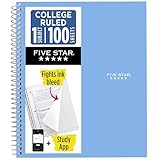
Keep words and worked examples together in this single-subject spiral notebook. Its college-ruled lines suit compact handwriting; choose wider spacing if you need more room.
View this choice on Amazon USPut the idea to work in the practice tools, or browse the book basket checklist.